

Delaying necessary electrical maintenance can look like a saving. In practice, it often shifts a manageable item from a planned budget into a less predictable operational event.
For facility managers and property, asset and business management teams, the repair invoice is rarely the whole issue. The real cost may include an unplanned shutdown, emergency attendance, temporary supply, disruption to occupants, pressure from stakeholders and a repair scope that has grown beyond the original defect.
Across 30 years of supporting commercial electrical infrastructure in South East Queensland, EDC Systems QLD has seen a consistent pattern: when asset condition is understood early, clients retain more control over cost, timing and disruption. Once a fault dictates the response, those choices reduce quickly.
The repair is only one part of the cost
Electrical infrastructure supports far more than lighting and power outlets. A local fault may also affect communications, security, access control, air conditioning, lifts, specialist equipment or broader building operations.
For facility managers and other site decision-makers, the cost of a failure usually appears in several places.
Direct response costs increase. Urgent attendance, fault-finding, make-safe works, temporary power, replacement parts, return visits and after-hours access may all be required before the permanent repair is complete.
Disruption becomes unplanned. Staff, tenants, residents, customers or contractors may need to be relocated or managed around the affected area. Appointments, services, production or trading may be interrupted.
Stakeholder pressure increases. The people responsible for the site may need to brief management, occupants, tenants, clients, insurers or other contractors while the cause, timeframe and final cost are still being established.
This is why a repair invoice rarely represents the full business impact of deferred maintenance.
Planned maintenance protects choice
Planned maintenance allows you to control scope, timing and communication. Emergency maintenance removes many of those choices.
When a developing issue is identified during a planned inspection, the facility manager or property manager can assess the risk, obtain options, confirm lead times, allocate budget and arrange access or a shutdown around site operations. Relevant stakeholders can be advised before the work begins.
After a failure, the sequence is usually dictated by the site. The priority becomes making the area safe and restoring essential services. The fastest available component may be used rather than the preferred long-term option. Temporary works may be required while parts, engineering, access equipment or civil works are arranged.
Not every maintenance finding requires immediate replacement. A practical program separates items that need prompt attention from those that can be monitored, included in a future shutdown or budgeted as part of an asset replacement plan.
The important point is that each recommendation has a decision, an owner and a timeframe. Unresolved items should not simply disappear into a report.
A real example from an occupied site
A recent EDC project at an occupied aged care site shows how quickly an electrical fault can become a broader operational issue.
Multiple underground faults caused a loss of supply to several resident dwellings. The initial response involved emergency fault-finding and temporary supply works to help restore power while the condition of the existing infrastructure was investigated.
Testing and a site audit found that the direct-buried underground cabling was no longer fit for purpose. The permanent solution required an engineered infrastructure upgrade, approximately 200 metres of under-boring, new conduits, electrical pillars and replacement cabling.
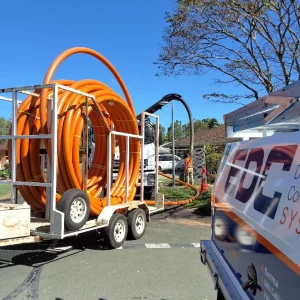
The works were completed successfully, with careful planning around residents, existing services, landscaped areas and newly installed driveways. However, the project demonstrates that the cost of failure extended well beyond a damaged cable. It involved emergency response, temporary supply, investigation, design, civil works, stakeholder coordination and a staged transition to the new electrical supply.
This example does not suggest that every electrical failure can be predicted or prevented. It shows why visibility of asset condition, previous findings and ageing infrastructure matters. Once essential infrastructure fails, the issue is no longer only electrical. It becomes an operational, budget and stakeholder-management issue.
Turning maintenance findings into informed decisions
Programmed maintenance helps facility managers, property and asset management teams understand asset condition and make informed decisions before a fault limits their options.
A useful programmed maintenance process should leave the facility manager or property and asset manager with a clear understanding of:
- what was inspected
- what was found
- what requires attention now
- what can be monitored
- what should be planned for the next shutdown
- what should be included in future capital or maintenance budgets.
At EDC Systems QLD, the purpose of programmed maintenance is not simply to complete an inspection and issue a report. It is to provide practical information that helps clients prioritise risk, coordinate works and manage their electrical assets over time.
That may involve switchboard inspections, thermal imaging, RCD testing, emergency and exit lighting testing, condition reporting and follow-up rectification. The appropriate scope and frequency will depend on the facility, the importance and condition of its assets, previous findings and any relevant client, lease, insurer or compliance requirements.
A report should support a decision, not simply record that a visit occurred.
Practical steps to reduce the cost of deferral
Facility managers and property and asset managers can strengthen their electrical maintenance planning by:
- identifying the electrical assets that are critical to site operations
- reviewing previous reports and maintaining a register of outstanding findings
- classifying each item as urgent, planned, monitor or budgeted replacement
- aligning inspections and rectification works with operating hours, shutdowns and budget cycles
- recording completed work and confirming that recommendations have been closed out or rescheduled.
This does not require every item to be completed immediately. It requires a clear basis for deciding what happens next.
Electrical assets will eventually require maintenance or replacement. The question is rarely whether the work will occur, but whether it will be completed under planned conditions or dictated by an unexpected failure.
The lowest maintenance spend in a single budget period is not always the lowest lifecycle cost. Facility managers and property or asset management teams that retain visibility of asset condition and unresolved recommendations are better placed to protect operational continuity, explain priorities to stakeholders and maintain control over expenditure.
EDC Systems QLD provides programmed maintenance, switchboard inspections, thermal imaging, testing, reporting and responsive electrical support for commercial buildings and operational facilities across Brisbane and South East Queensland.
To review the current electrical maintenance requirements for your site, contact the EDC Systems QLD team or request a Compliance and Maintenance Review.